The human body may appear relatively unchanged from day to day, but at the cellular level it is remarkably dynamic. Cells are continually being produced, communicating with their surroundings, performing specialised functions, ageing and eventually being replaced or recycled.
Red blood cells provide one of the clearest examples
From Bone Marrow to Bloodstream
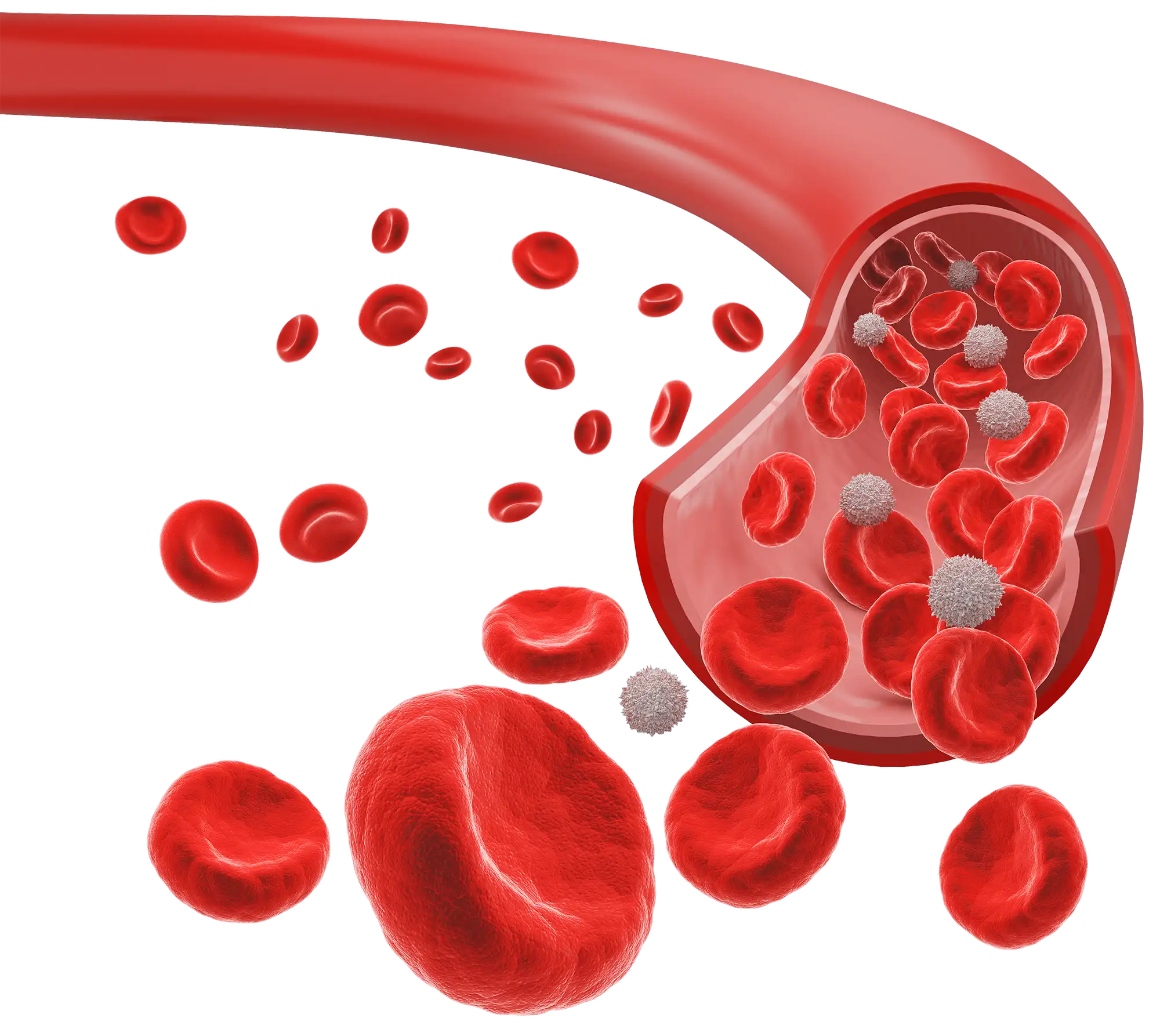
Red blood cells, or erythrocytes, originate from hematopoietic stem and progenitor cells within the bone marrow.
During their development, they undergo a highly specialised maturation process. Reticulocytes—the immediate precursors of mature red blood cells—enter the bloodstream and generally complete their maturation within approximately one to two days.
Unlike most human cells, mature red blood cells do not contain a nucleus. Their specialised structure allows them to carry large amounts of haemoglobin, the protein responsible for transporting oxygen.
Bone Marrow
(site of red blood cell production)
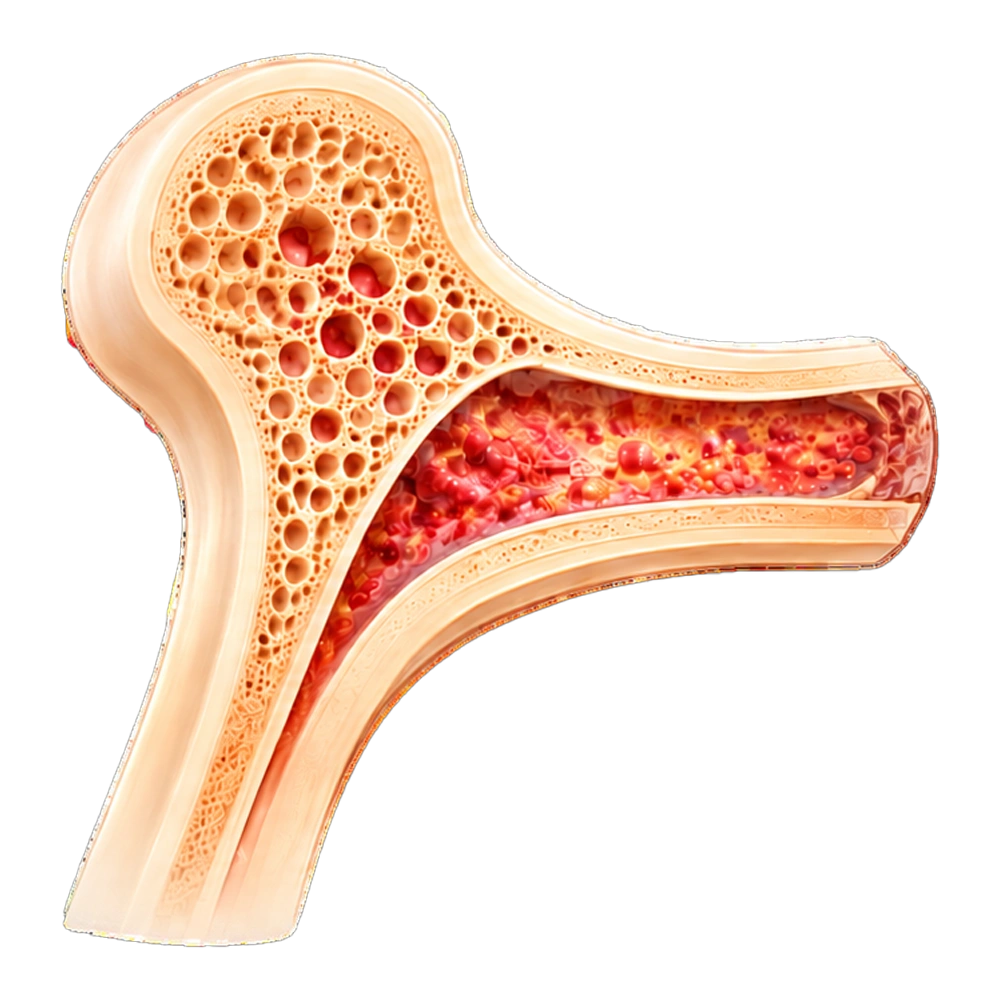
Hematopoietic stem cell
Reticulocyte
(matures in ~ 1-2 days)
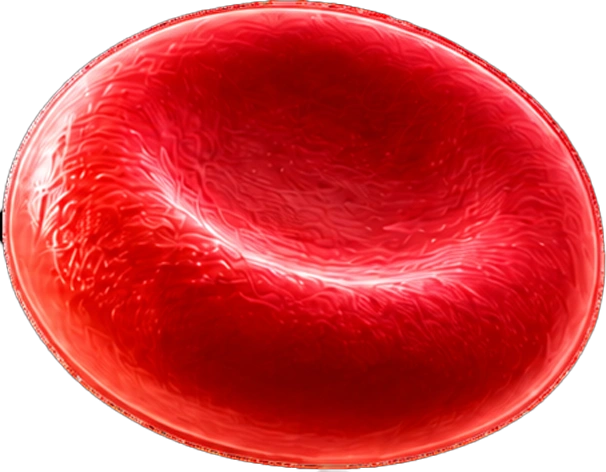
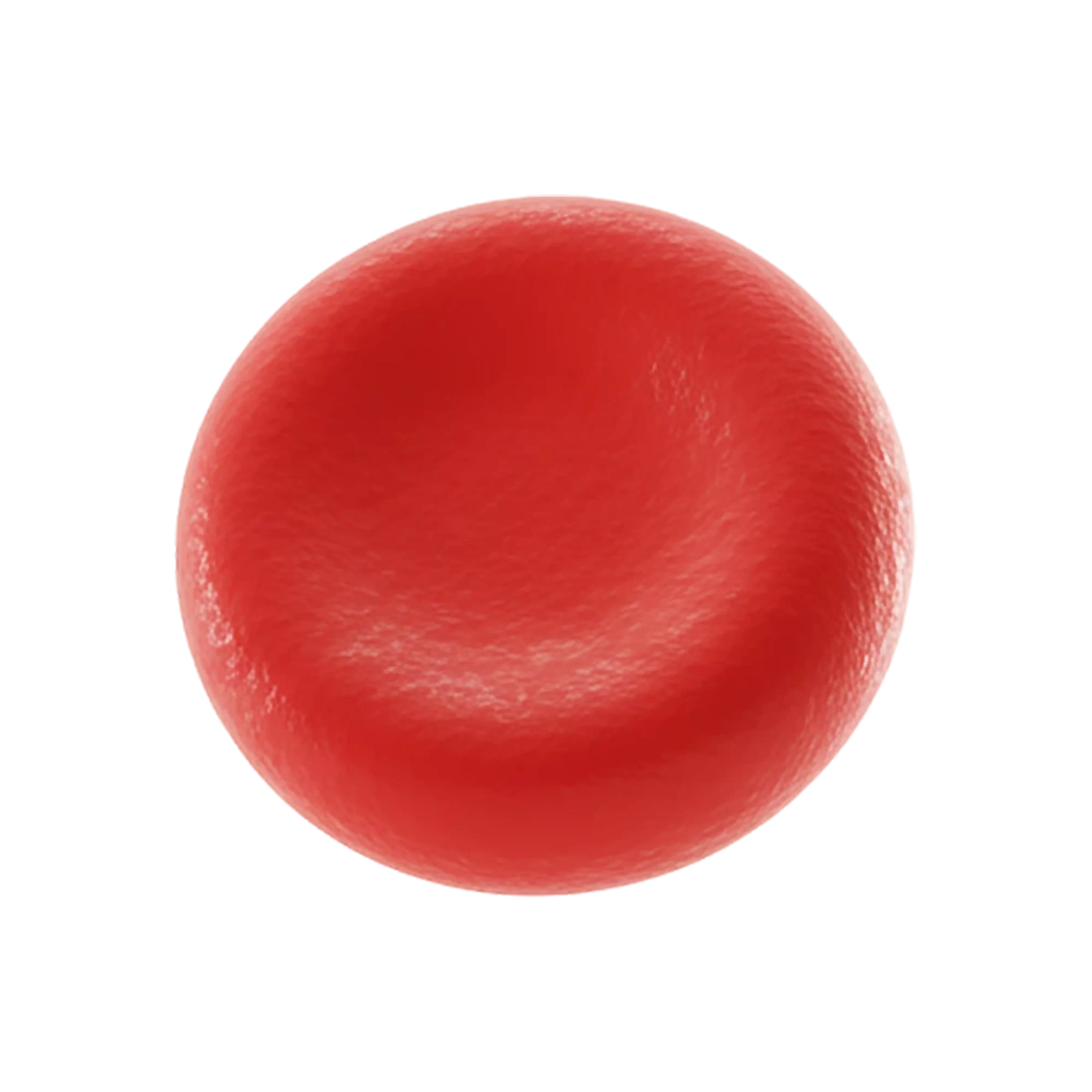
Mature red blood cell
(erythrocyte)
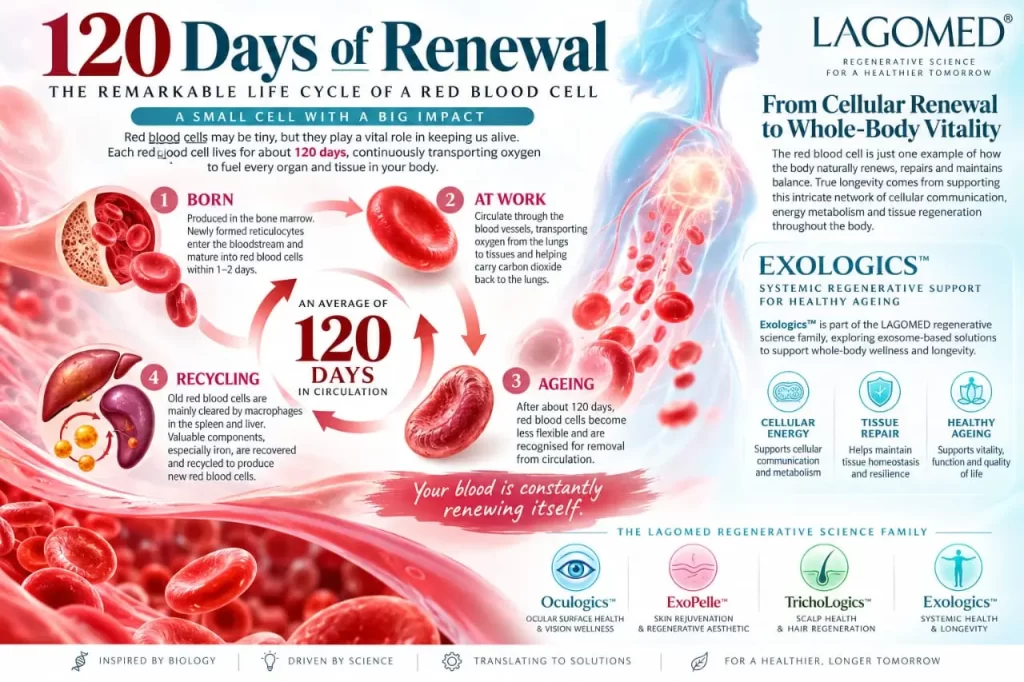
Approximately 120 Days of Continuous Circulation
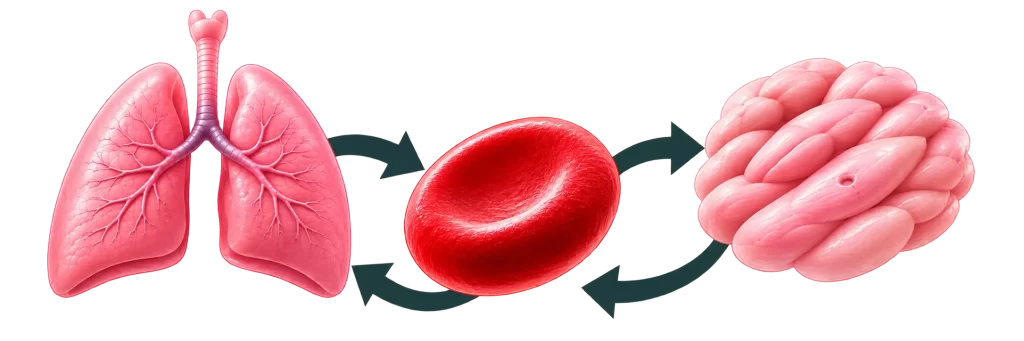
A circulating red blood cell has an average lifespan of approximately 120 days. During this period, it repeatedly travels between the lungs and peripheral tissues. Haemoglobin binds oxygen in the lungs and releases it where tissues require it for metabolism.
Red blood cells also participate in carbon dioxide transport and contribute to maintaining the body’s acid-base balance.
Their role therefore extends far beyond simply being “red cells”—they form part of a highly coordinated physiological transport system.
~120 days
(average lifespan)
Lungs
(bind oxygen)
Tissue
(release oxygen for metabolism)
What Happens as Red Blood Cells Age?
Red blood cells cannot repair themselves in the same way as nucleated cells because they lack a nucleus and much of the cellular machinery required for protein synthesis.
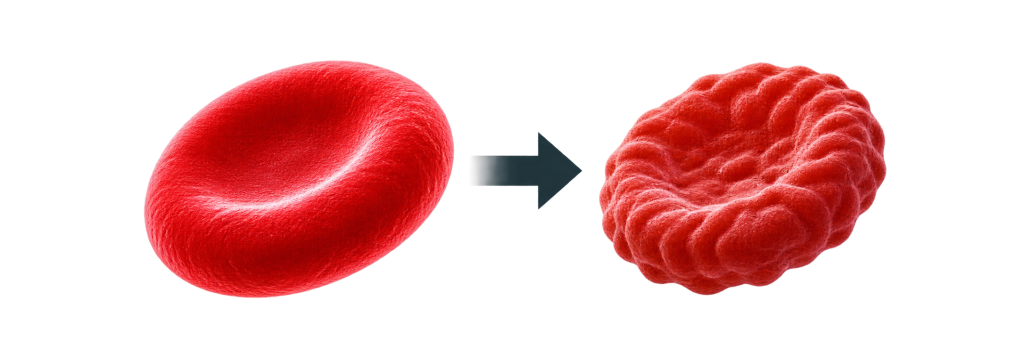
Over time, biochemical and structural changes accumulate. Their membranes become less deformable, making it increasingly difficult for ageing cells to navigate the narrow microcirculation and splenic environment.
The body can then recognise and remove these senescent cells.
Younger Red Blood Cell
(more deformable)
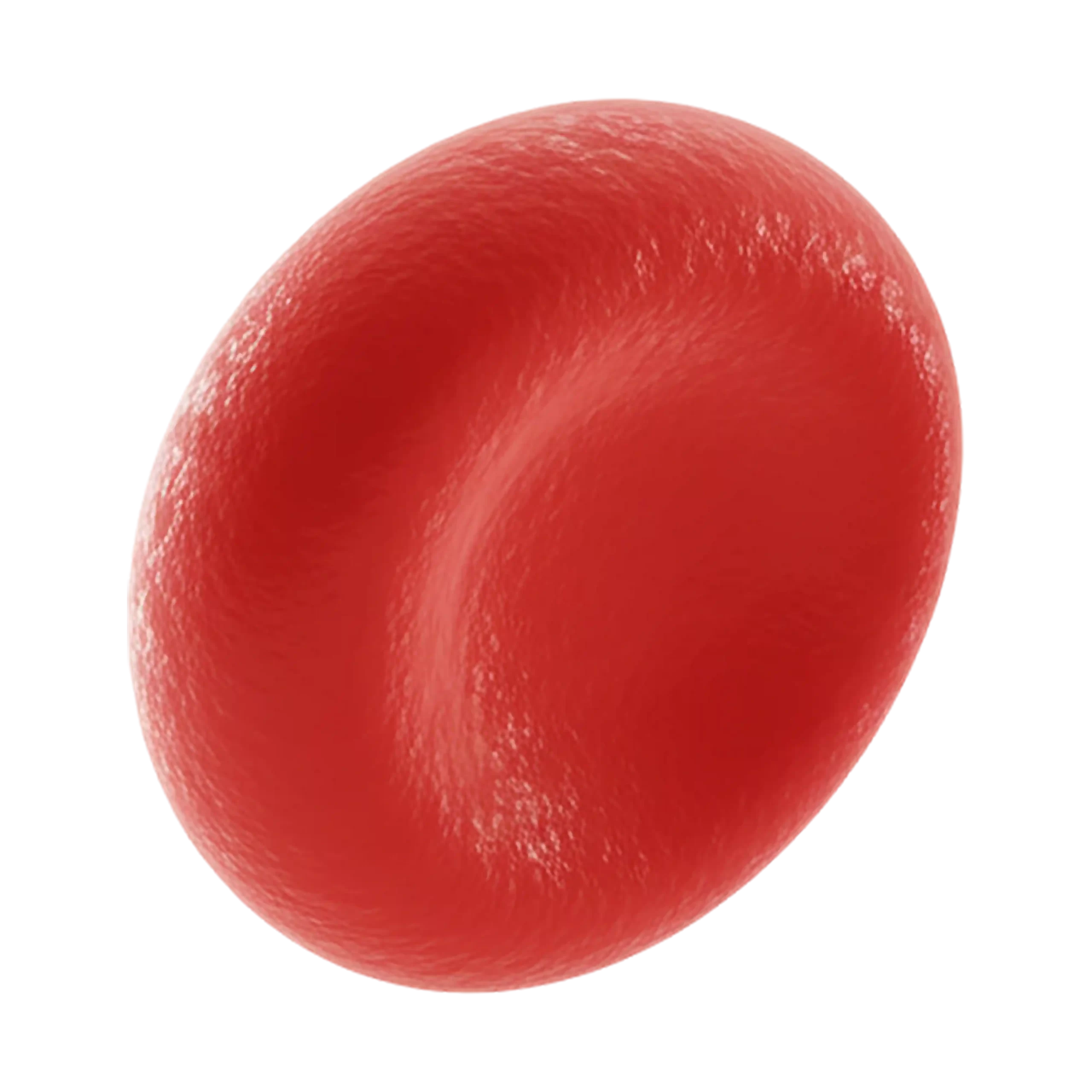
Ageing Red Blood Cell
(less deformable)
Recycling Rather Than Waste
Old red blood cells are predominantly cleared by macrophages, particularly within the spleen and liver.
But their components are not simply discarded.
Haemoglobin is broken down, and iron is recovered and recycled. That iron can subsequently return to the bone marrow and contribute to the formation of new haemoglobin and new red blood cells.
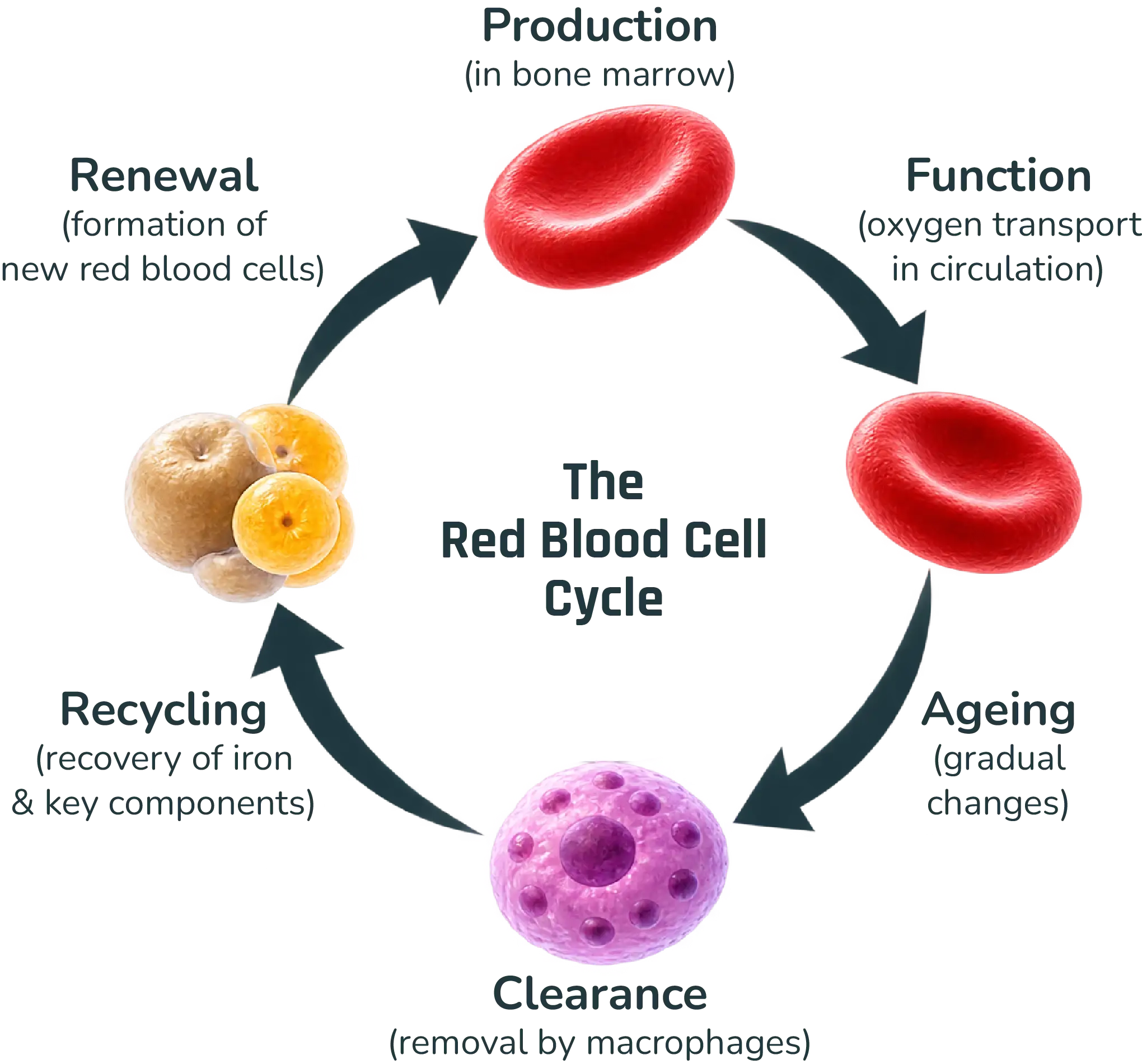
The result is an elegant biological cycle:
Production → Function → Ageing → Clearance → Recycling → Renewal
What Does This Have To Do With Regenarative Sceince?
Regenerative medicine is sometimes described simply as “replacing damaged cells.” Modern biology reveals a much more sophisticated picture.
Tissue behaviour is influenced not only by the cells themselves but also by their microenvironment and intercellular communication.
Cells communicate through soluble factors and extracellular vesicles, including small extracellular vesicles commonly discussed in exosome research. These vesicles can transport biologically active molecular cargo between cells and are therefore being intensively investigated as mediators of cell-to-cell communication.
This is one reason extracellular-vesicle science has become an important field within regenerative and translational research.
From Biological Principle to Oculogics™ & ExoPelle™
This concept also provides an educational bridge to the research direction behind Oculogics™ and ExoPelle™
Oculogics™
Our translational interest is in understanding extracellular-vesicle-based approaches within the ocular surface microenvironment, including their potential relevance to cellular communication and tissue homeostasis.
ExoPelle™
The focus moves to the skin and aesthetic-regenerative environment, exploring how exosome-related biological signalling can be incorporated into translational approaches involving skin quality and recovery.
From Biological Principle to Oculogics™ & ExoPelle™
This concept also provides an educational bridge to the research direction behind Oculogics™ and ExoPelle™
The red blood cell story does not mean that exosomes “renew blood” or that Oculogics™ or ExoPelle™ reproduce the red-cell lifecycle. Rather, it illustrates a broader and scientifically important principle:
" Human biology depends on continuous turnover, recycling, signalling and adaptation. Regenerative science seeks to understand—and responsibly translate—these natural biological processes. "
From Science to Solutions
Translating regenerative biology into responsible innovation.
Extending the Concept from Cellular Renewal to Systemic Health
The lifecycle of the red blood cell illustrates a fundamental principle of human biology: healthy function depends on continuous renewal, communication, maintenance and recycling.
As we age, however, the biological environment in which our cells operate also changes. Cellular communication, mitochondrial function, inflammatory regulation, tissue repair and homeostatic mechanisms may become less efficient. This progressive decline is an important focus of modern healthy-ageing and longevity research.
This is where Exologics™ extends the LAGOMED regenerative-science concept from individual tissues toward a systemic perspective.
From Exosomes to Systemic Regenerative Science
Extracellular vesicles, including exosomes, are naturally involved in cell-to-cell communication. They can transport proteins, lipids and nucleic acids between cells, influencing how recipient cells respond to their biological environment.
Exologics™ explores this emerging field from the perspective of systemic regenerative and healthy-ageing research, with particular scientific interest in:
Cellular communication
investigating signalling between cells and tissues.
Cellular resilience
understanding how cells respond to physiological stress and ageing.
Metabolic and mitochondrial health
exploring mechanisms associated with cellular energy and function.
Tissue homeostasis
supporting research into the body’s ability to maintain biological equilibrium.
Inflammaging
investigating age-associated changes in inflammatory signalling.
Regenerative capacity
studying biological pathways associated with repair and recovery.
Healthy ageing and longevity
ultimately seeking to preserve function, vitality and healthspan as we age.
Longevity Is More Than Living Longer
The objective of longevity science should not simply be to add years to life.
It is to understand how we may help preserve healthspan—the years of life spent with good physiological function, mobility, cognition, resilience and quality of life. Therefore, the Exologics™ philosophy can be expressed as:
" From cellullar communication to systemic resilience. From regenerative science to healthier ageing. "